Paving an Alternative Path to Gmail
Since day one, we've been building Clint with an open development approach (built in public). We don't hide what we do, why we do it, and sometimes what we don't do on purpose. Today we want to share with you a new feature we've been working on, before it's finished.

Yakup Bayrak
Builder
An Open Experiment on Bill Reading with Google Drive in Clint
Since day one, we've been building Clint with an open development approach (built in public).
We don't hide what we do, why we do it, and sometimes what we don't do on purpose.
Today we want to share with you a new feature we've been working on, before it's finished.
Let's Make the Problem Clear
Today Clint connects to your Gmail account with read permission to analyze your bills.
This is technically
that we only scan emails that contain invoices,
that we do not interfere with the content,
that we haven't changed any e-mails
even though it's a fiction.
We know:
"I don't want to connect an app to my Gmail".
We do not find this objection unjustified.
We even take it seriously.
Our hypothesis
We started with this assumption:
For some users, the real problem is not Clint, but the idea of a third party accessing their email box.
And we asked the question:
"If instead of Gmail,
what if it was in a folder that the user controlled?"
New Approach Clint Invoices (Google Drive)
The new feature we're working on is based on the following idea:
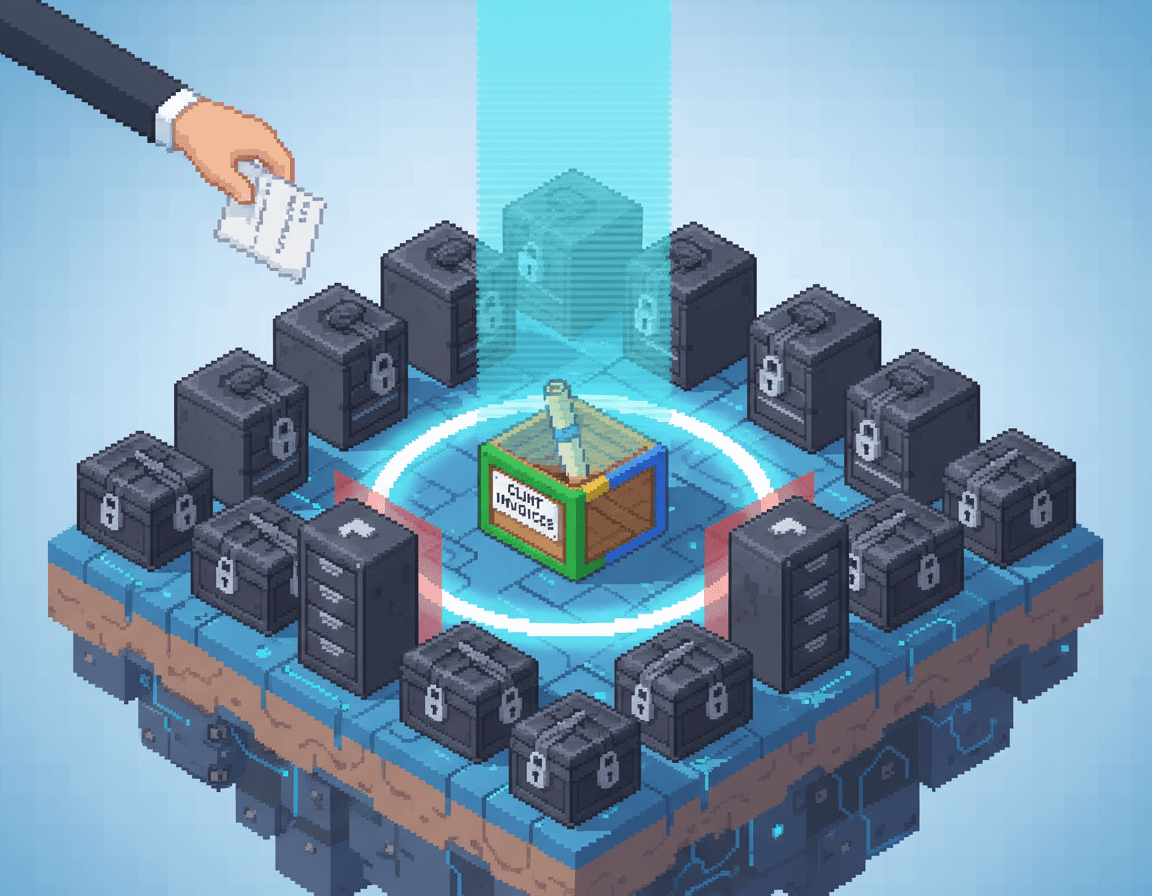
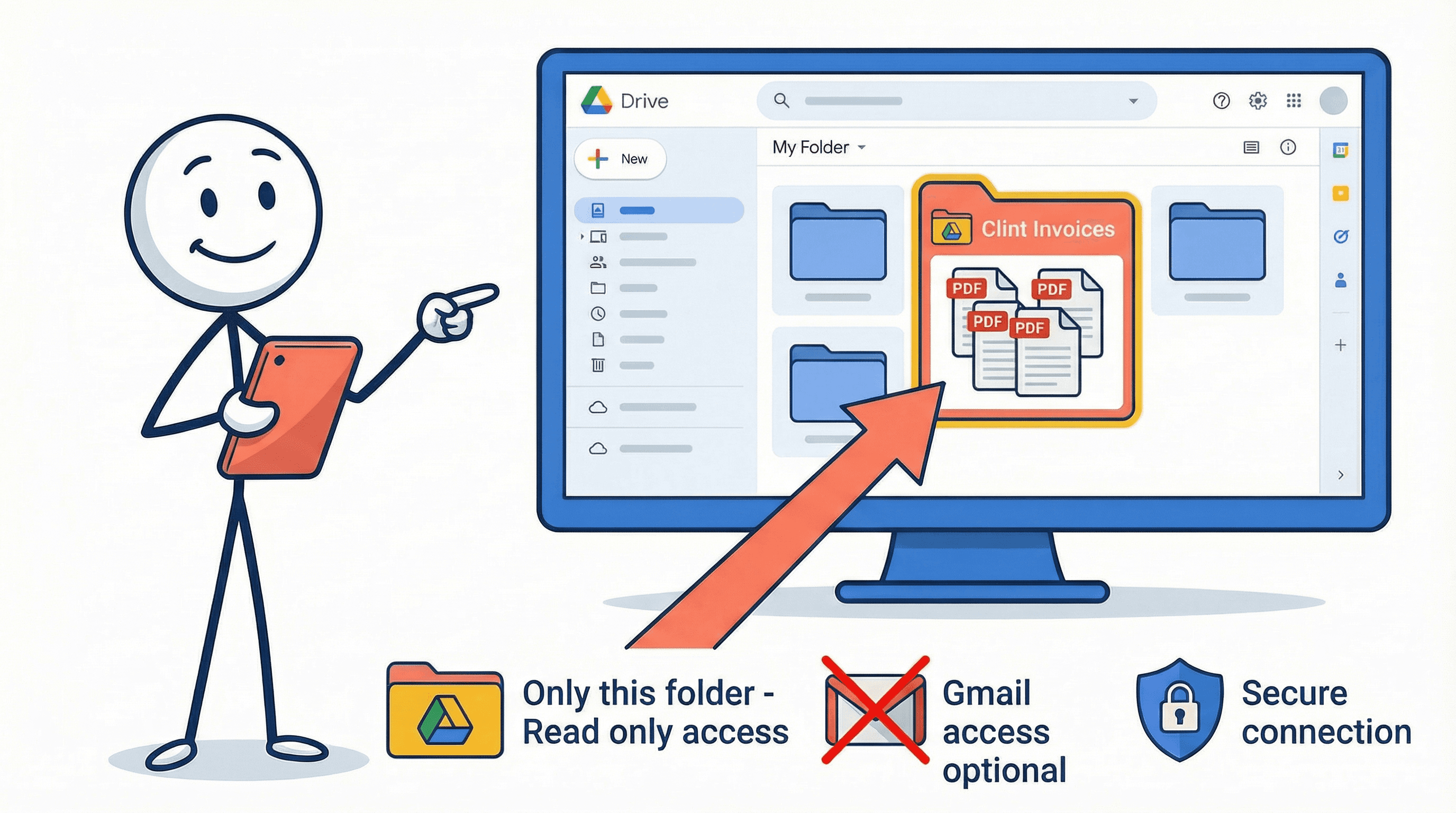
Clint creates its own "Clint Invoices" folder in your Google Drive
You upload your invoices to this folder
Clint only reads this folder
He never touches Gmail
Meaning…
we don't scan your entire Drive
we are not looking at your other files
we only analyze the invoices in this folder
"But Is It Safe?"
We plan to be particularly transparent here and want to share clearly how we are approaching this feature, which is still in development:
Clint doesn't get the original invoices from Drive and store them on his servers
Files are temporarily processed for analysis
Deleted after analysis is finished
What's left in Clint:
→ extracted insights such as amount, date, vendor
So Clint:
he's not the document holder,
a system that understands the document.
We Consider Possible Scenarios Together (Planning Phase)
There are some real-life scenarios that we put on the table when we developed this feature:
What happens if the same invoice arrives in Gmail and is uploaded to Drive?
→ It's not a duplicate, Clint automatically resolves the duplication.
What if the same invoice is accidentally uploaded to the folder twice?
→ It is still treated as a single invoice.
What if the invoice in Drive is subsequently updated?
→ It is treated as a new version, reports are not corrupted.
If thousands of invoices are thrown into the folder at once?
→ The most recent ones are processed first, the rest follow.
We want to clarify all of these scenarios by discussing them with you before we start coding.
An Alternative or a Replacement for Gmail?
This is important.
This feature:
Not necessarily a replacement for Gmail synchronization
But a clean alternative for users who don't want to connect to Gmail
In particular
security-sensitive users
corporate e-mail users
those who already archive their invoices on Drive
for a more comfortable way of life.
Now it's your turn
Here's the thing about built in public:
We make assumptions,
but we don't make decisions alone.
We'd really like your opinions on the following questions:
Would you feel more comfortable reading invoices from Drive instead of Gmail?
Do you think the "access only to a specific folder" model is clear enough?
Would you be willing to try Clint if this feature was available?
Is there anything that still bothers you?
We would be very happy if you could share your feedback with us by emailing us at help@clint.website or by commenting below our post on LinkedIn.
Final Note
Our goal in developing Clint is this:
Helping people understand their money,
not to lose a sense of control over their data.
This new path could bring us a little closer to that goal.
But before we decide,
we'd like to talk to you.
Share on social media